Research Highlights
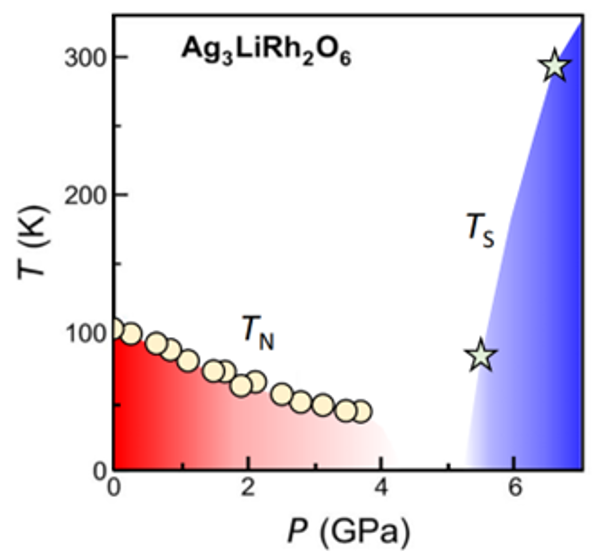
Pressure Tuning of Competing Interactions on a Honeycomb Lattice
1/23/2026 | Russell Hemley (University of Illinois-Chicago)
Materials with a honeycomb lattice and heavy elements can sustain anisotropic Kitaev interactions that favor a quantum spin liquid (QSL) ground state. The same materials also host isotropic Heisenberg interactions that favor a long-range magnetic order (LRO). Theoretically, the QSL ground state could be established by tuning the competition between the Kitaev and Heisenberg interactions in favor of the former.
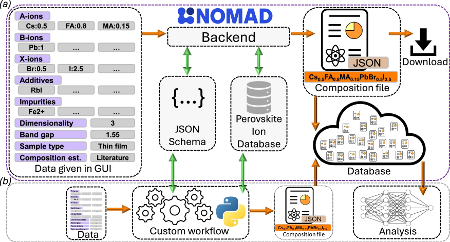
Toward an Interoperable Perovskite Description
12/1/2025 | Volker Blum (Duke University)
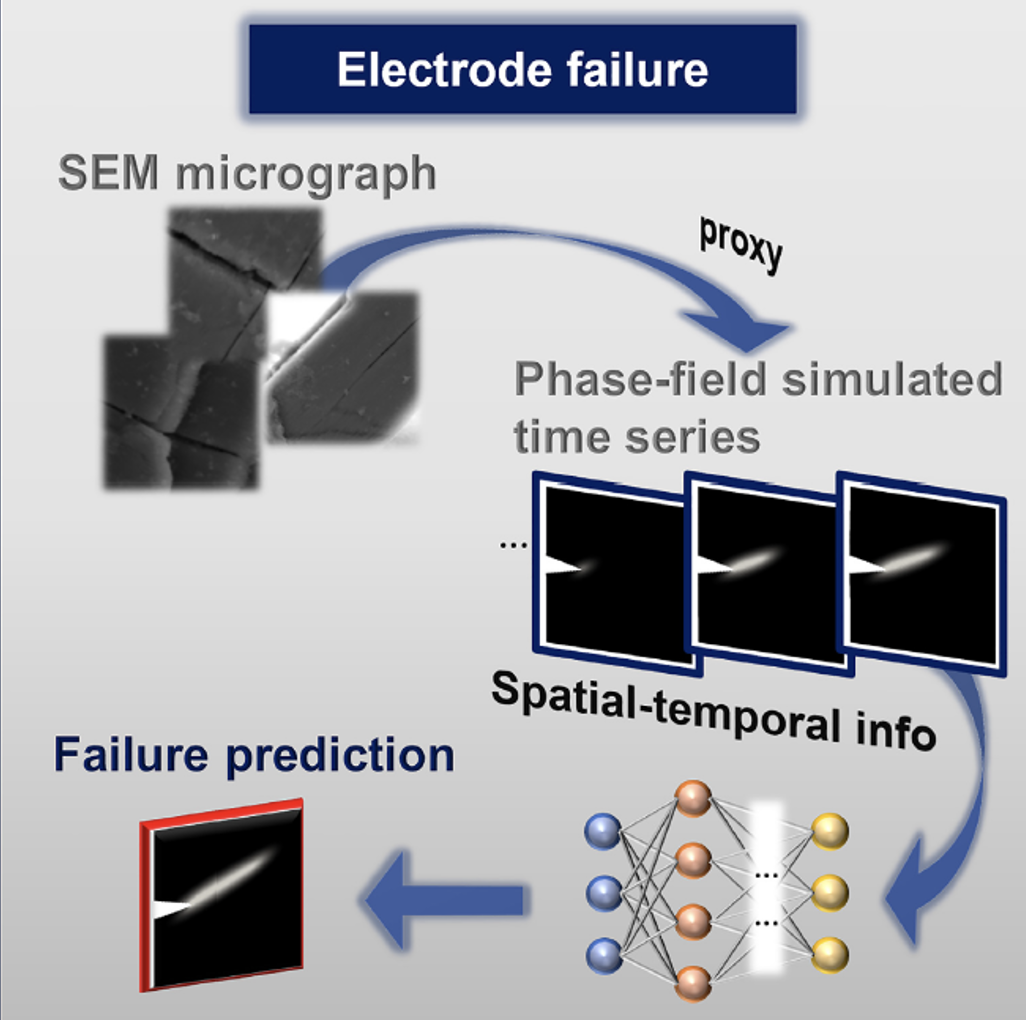
Chemomechanical Damage Prediction from Phase-field Simulation Video Sequences using a Deep-learning-based Methodology
11/24/2025 | Sarbajit Banerjee (Texas A&M University)

Large Modulation of the Bottlebrush Diblock Copolymer Morphology and Structural Color through Solvent Selectivity
11/19/2025 | Simon Rogers, Damien Guironnet, and Ying Diao (University of Illinois)
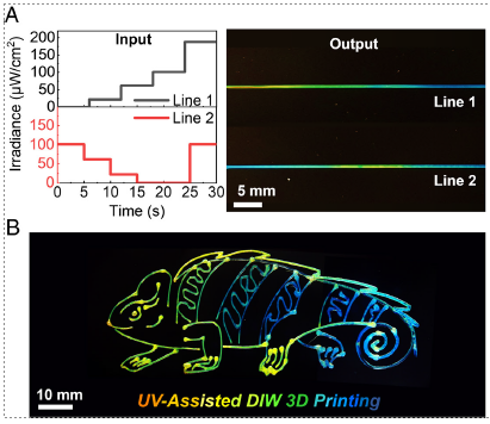
Direct-ink-write Cross-linkable Bottlebrush Block Copolymers for on-the-fly Control of Structural Color
11/19/2025 | Simon Rogers, Charles Sing, Damien Guironnet, and Ying Diao (University of Illinois)
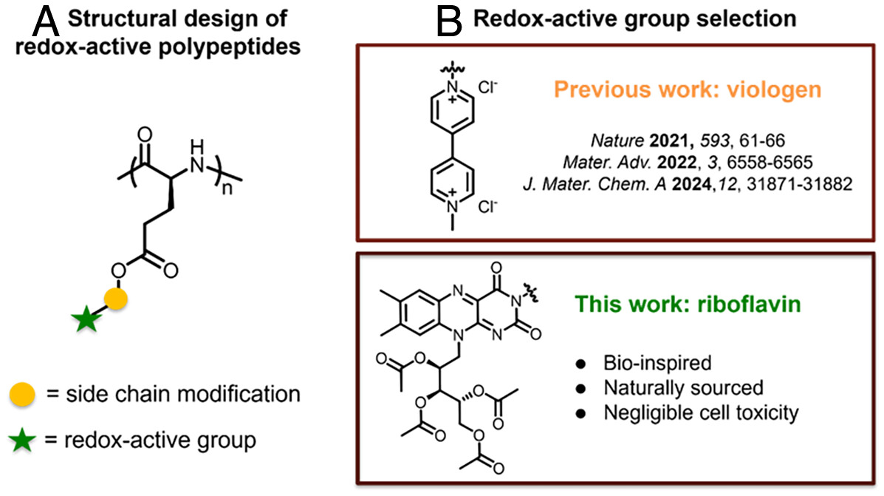
A Bioinspired and Degradable Riboflavin-containing Polypeptide as a Sustainable Material for Energy Storage
11/18/2025 | Jodie Lutkenhaus (Texas A&M University)
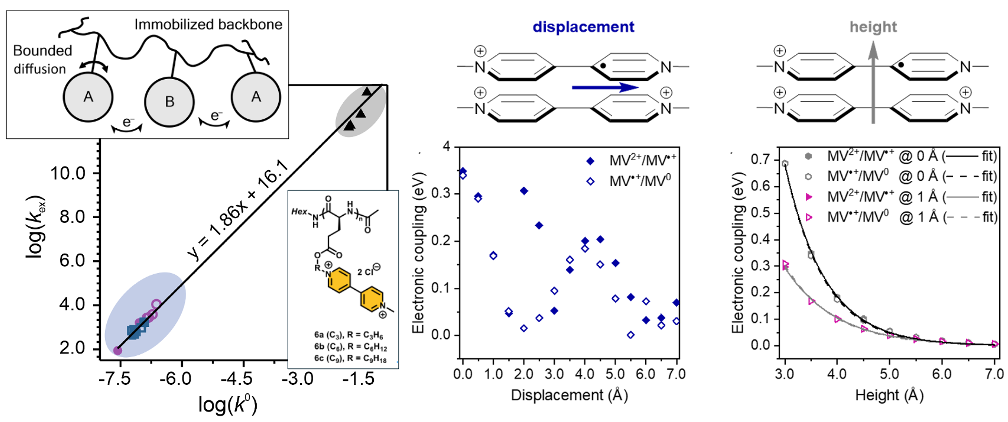
Accelerated Design of Redox-Active Polymers for Metal-Free Batteries
11/18/2025 | Daniel Tabor and Jodie Lutkenhaus (Texas A&M University)

Radiation Hardened Infrared Photodetectors
11/13/2025 | Jason D. Azoulay (Georgia Tech.); Jarrett H. Vella (AFRL)

Energy Transfer Mechanisms in Large Low-bandgap Polymers
11/13/2025 | M. Y. Sfeir and J. D. Azoulay (Georgia Tech.) B. M. Wong (U. CA – Riverside)
First Direct Measurement of a Large Exciton Binding Energy in a 2D Magnet
9/25/2025 | Bing Lv (University of Texas - Dallas)
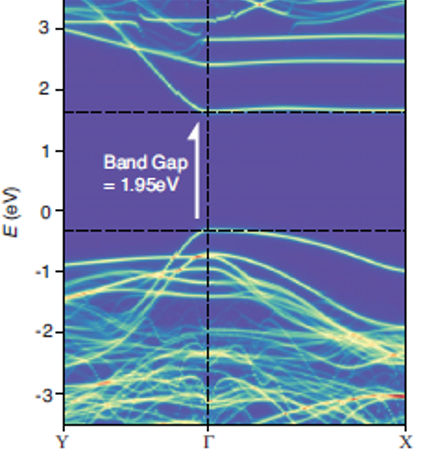
In this paper, researchers report the first direct measurement of a large exciton binding energy in a 2D magnet, CrSBr. Using high-resolution angle-resolved photoemission spectroscopy and self-consistent GW calculations, they show electronic localization and weak dielectric screening boost exciton binding energy in this bulk van der Waals antiferromagnet. They also find surface doping can tune the band gap, suggesting ways to engineer exciton-based optoelectronics and study how anisotropy affects strongly interacting bulk systems.
Showing 41 to 50 of 245