Research Highlights
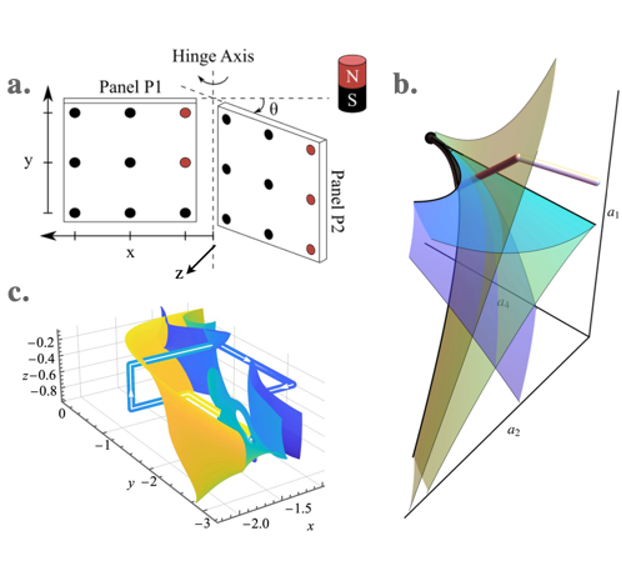
New Paradigm for the Design of Emergent Function
3/20/2018 | I. Cohen and P. McEuen (Cornell U.)
Systems composed of many interacting elements that collaboratively generate a function, such as meta-material robots, proteins, and neural networks are often not amenable to compartmentalized design: where individual modules each perform a distinct subfunction and are composed to create a complex function. A team at Cornell recently pursued an alternative design paradigm where the function of a machine arises simultaneously from interactions of all the machine components, and the operation of the machine is organized by a bifurcation of multiple equilibria - defined as the point where the machine transitions from having one possible configuration to a number of possible configurations.

Engineering Broad Range Temperature Active Enzymes
3/20/2018 | Sapna Sarupria (U. Minnesota)
Enzymes are eco-friendly and natural molecules with excellent properties. It is highly desirable to rationally engineer enzymes for target application in pharmaceutical, textile, and food industries. However, there are no clear design principles that enable this using rational site-directed mutagenesis approaches. In this work, molecular dynamics simulations were used to probe the activity–temperature relation used to explain the tradeoff between activity and stability in thermophilic and psychrophilic enzymes.
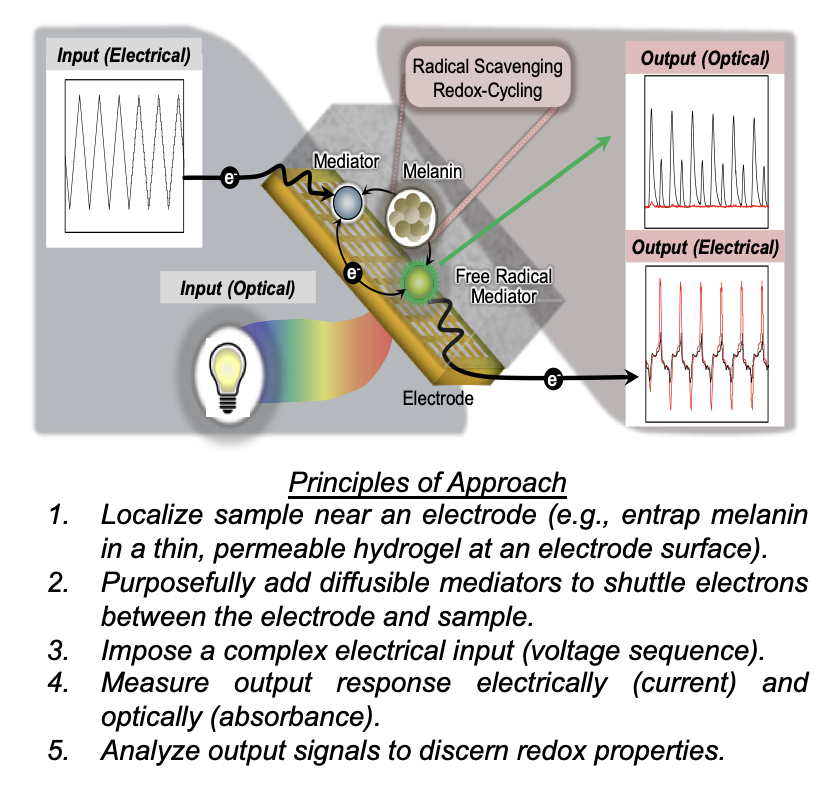
Reverse Engineering of Materials Properties
10/15/2017 | Gregory Payne and William Bentley
Traditional materials science approaches to characterize materials from nature or to develop new polymeric materials start by resolving chemical structure. Yet this approach fails for materials that have complex and ill-defined structures or that undergo dynamic changes as part of their function. This is the case for melanin a ubiquitous pigment in nature that is believed to offer protective antioxidant and radical scavenging properties.
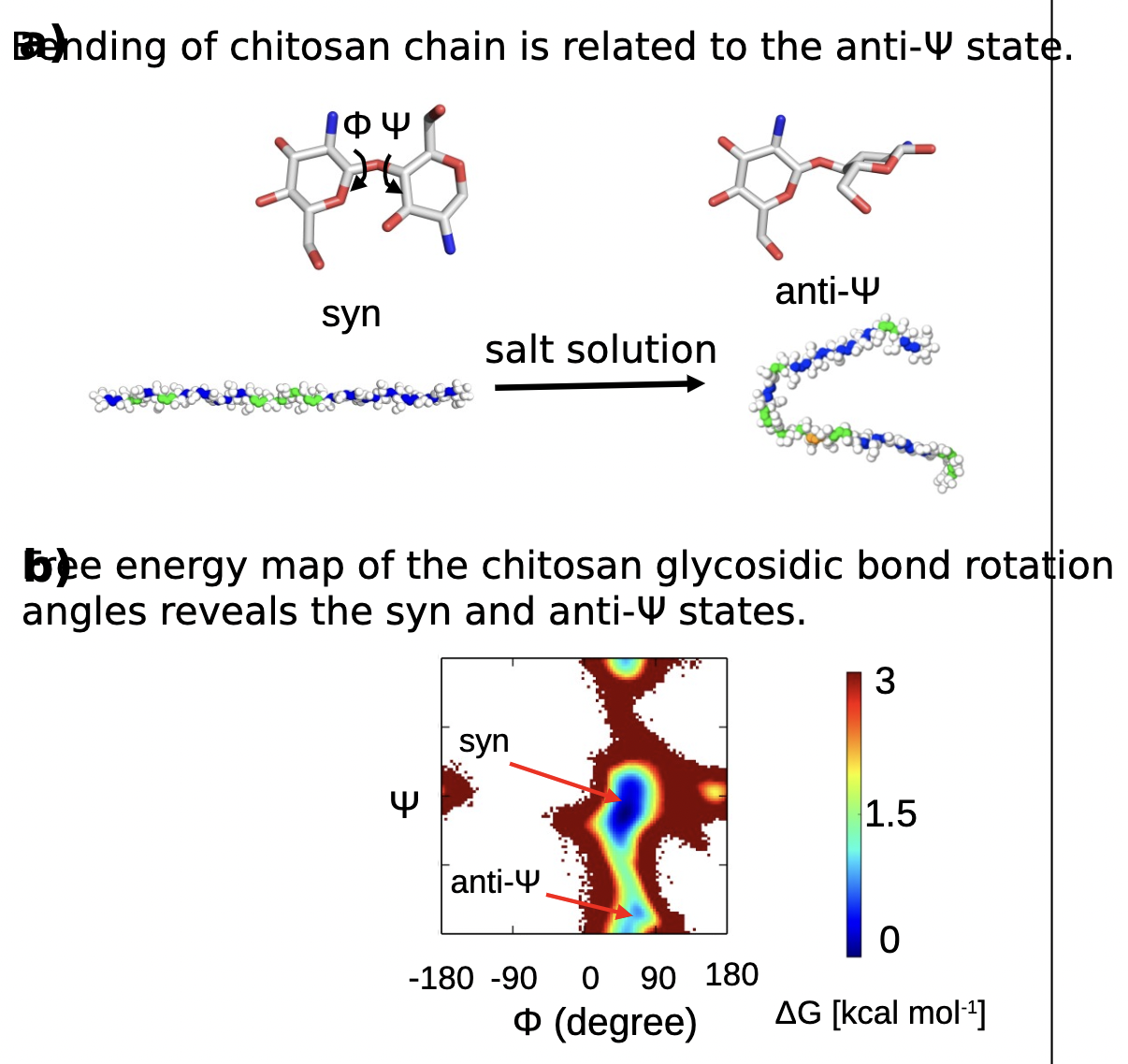
Elucidating Salt Effects on Chitosan Dynamics
7/21/2017 | Gregory Payne and Jana Shen
Using molecular dynamics simulations, we explored the solution salt effect on the conformational dynamics of chitosan chains. Our data revealed that the chitosan glycosidic bonds can rotate to an extended syn and the so-called anti-Ψ conformations.
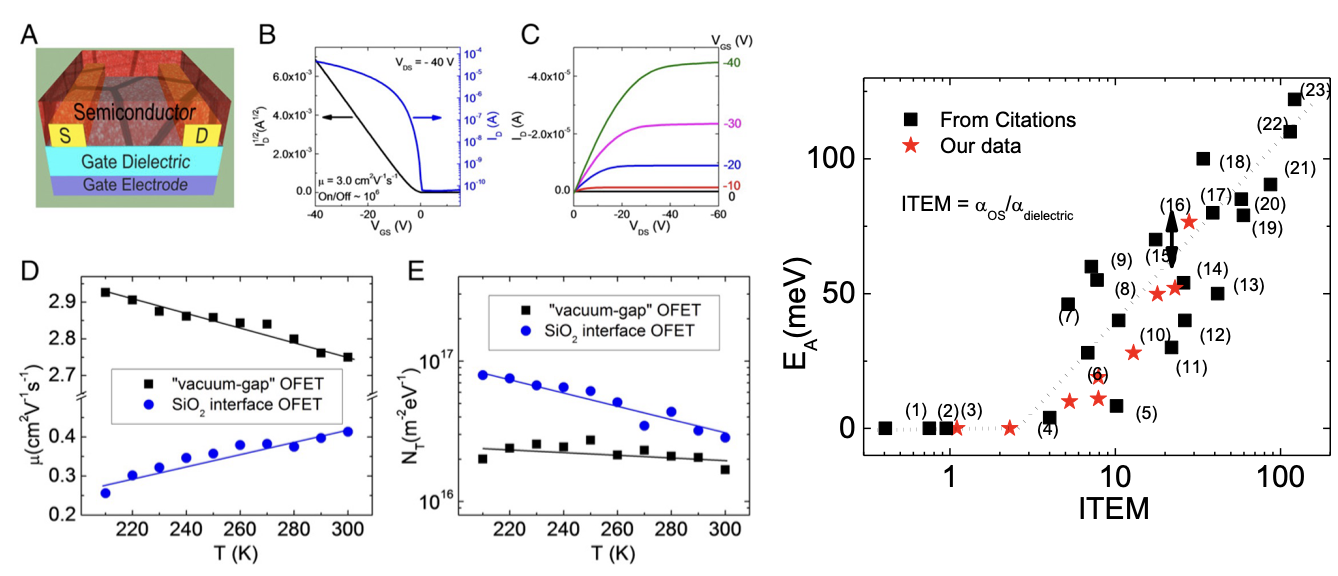
Strain at Interfaces in Organic Devices
7/1/2017 | C. Risko & J. Anthony (U. Kentucky); O. Jurchescu (Wake Forest U.)
The impact of inhomogeneous strain induced in an organic semiconductor was evaluated by virtue of the mismatch in the coefficients of thermal expansion of the consecutive layers on the transistor properties.
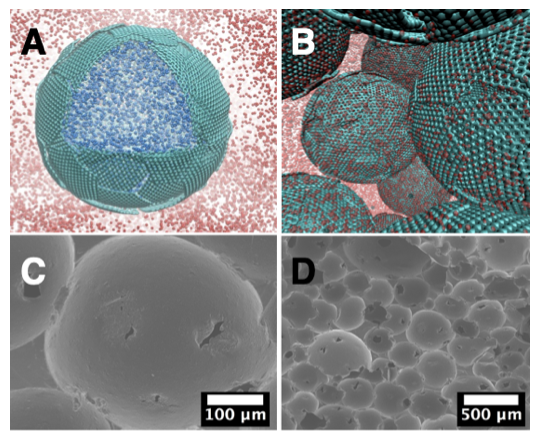
Controlled 3D Assembly of Graphene Sheets
3/6/2017 | Andrey Dobrynin and Douglas Adamson
Graphene is a two-dimensional carbon sheet that stacks together to make graphite, much like the playing cards in a deck. Utilizing the attraction of graphene sheets to the high energy interface between two immiscible liquids such as oil and water, we are able to drive the self-rearrangement graphene sheets, as the graphite exfoliates and covers the high energy liquid-liquid interface.
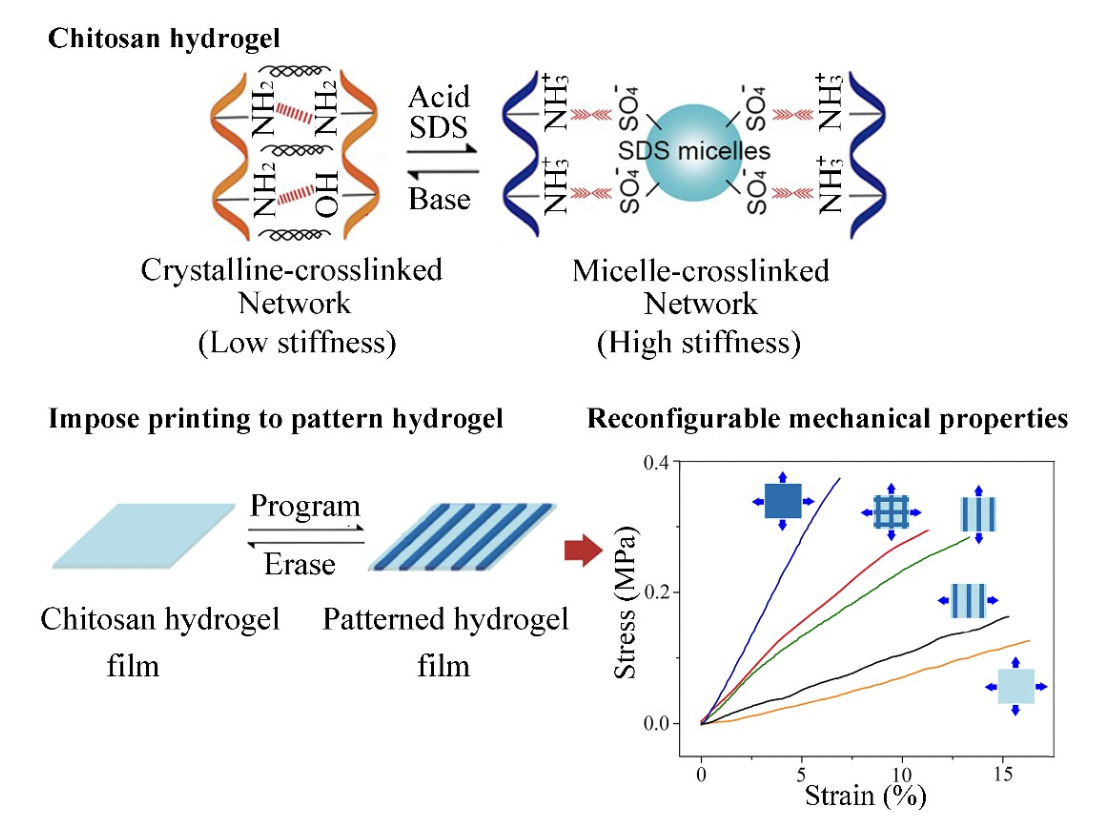
Reconfiguring Hydrogels by Switching Crosslinks
2/20/2017 | Gregory Payne
In order for biological systems to grow, heal and adapt they must be able to dynamically reconfigure. Using biology as a model, we created a hydrogel with reversibly reconfigurable mechanical properties based on the switching between two physical crosslinking mechanisms. Specifically, we used the renewable aminopolysaccharide chitosan and switched this hydrogel between an elastic crystalline network and a viscoelastic electroastatically crosslinked network.
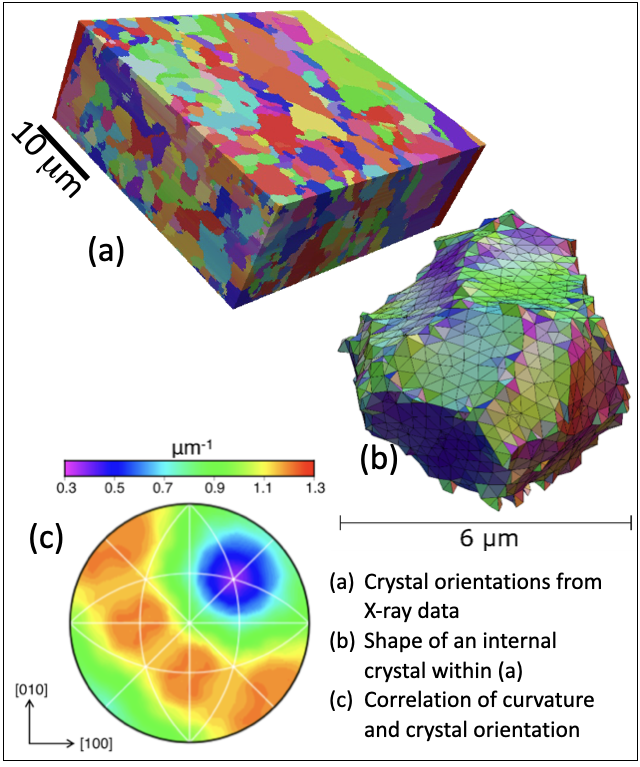
Crystallographic Distribution of Curvatures in Steel
1/15/2017
How is the motion of an interface between two solid crystals related to its shape? This is a question that was impossible to address in the past because we were not able to see within solids
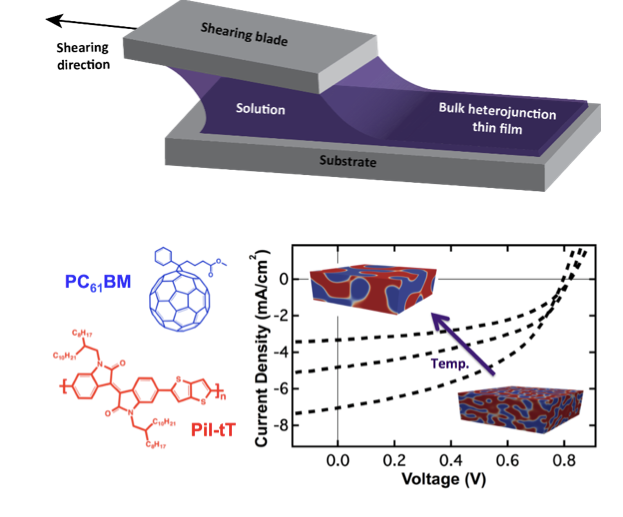
Tuning Organic Solar Cell Domain Properties
1/1/2017 | Zhenan Bao, Michael Toney
Despite having achieved the long sought-after performance of 10% power conversion efficiency, high performance organic solar cells are still constrained to small devices fabricated by spin coating. Efforts to scale up via printing lag considerably behind, revealing an extreme sensitivity to different fabrication methods.
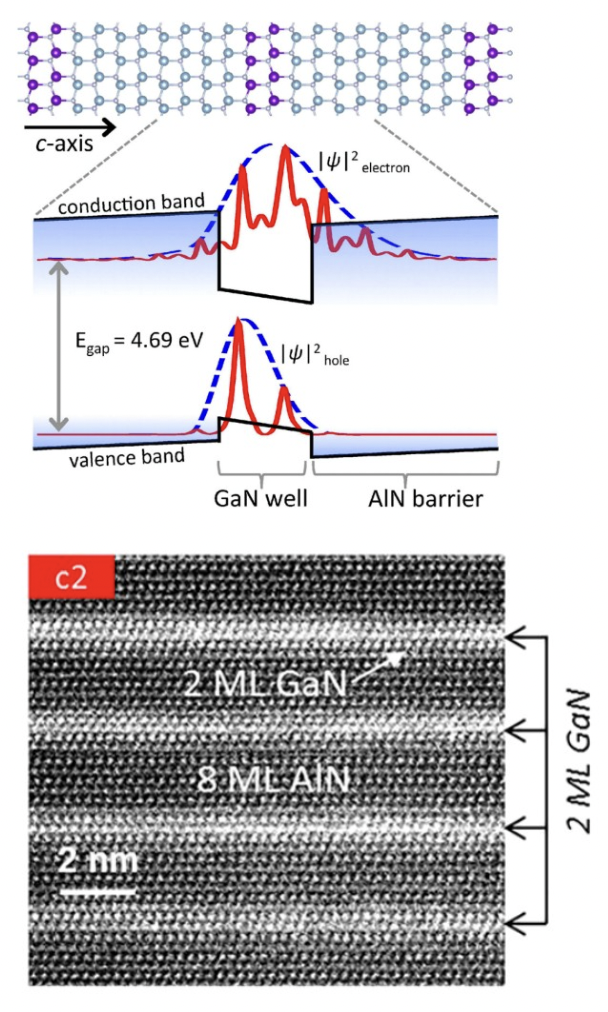
Extreme Quantum Confinement Heterostructures
12/1/2016 | D. Bayerl, S. Islam, C. M. Jones, V. Protasenko, D. Jena, and E. Kioupakis
In conventional semiconductor quantum heterostructures such as quantum wells based on GaAs or InAs that power today’s high-speed transistors in our cell phones, or the lasers in fiber-optic communication systems that carry our emails across the globe, it is necessary to precisely tune the energy of the electrons by quantum confinement
Showing 231 to 240 of 245