Design Principles for Sodium Superionic Conductors
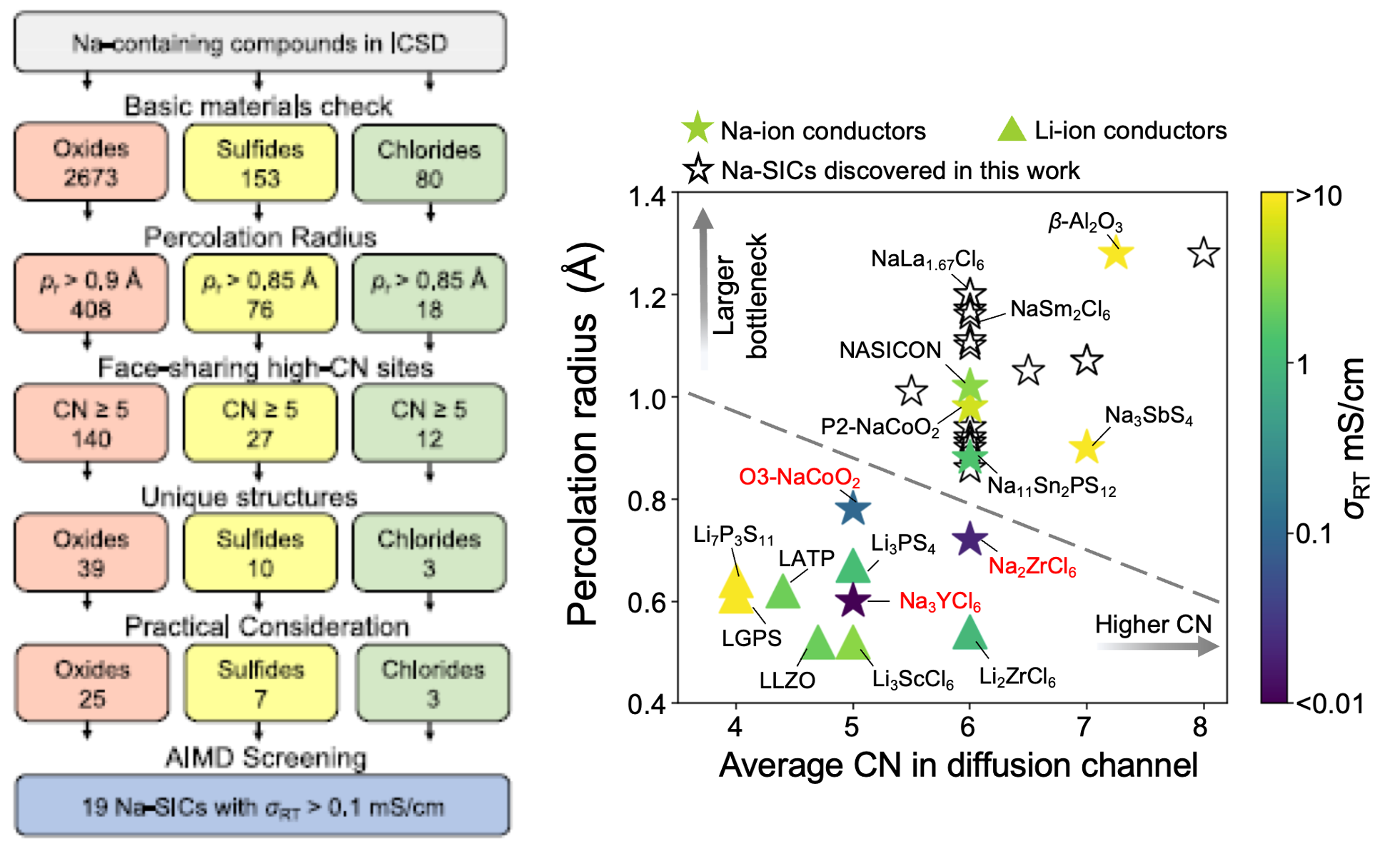
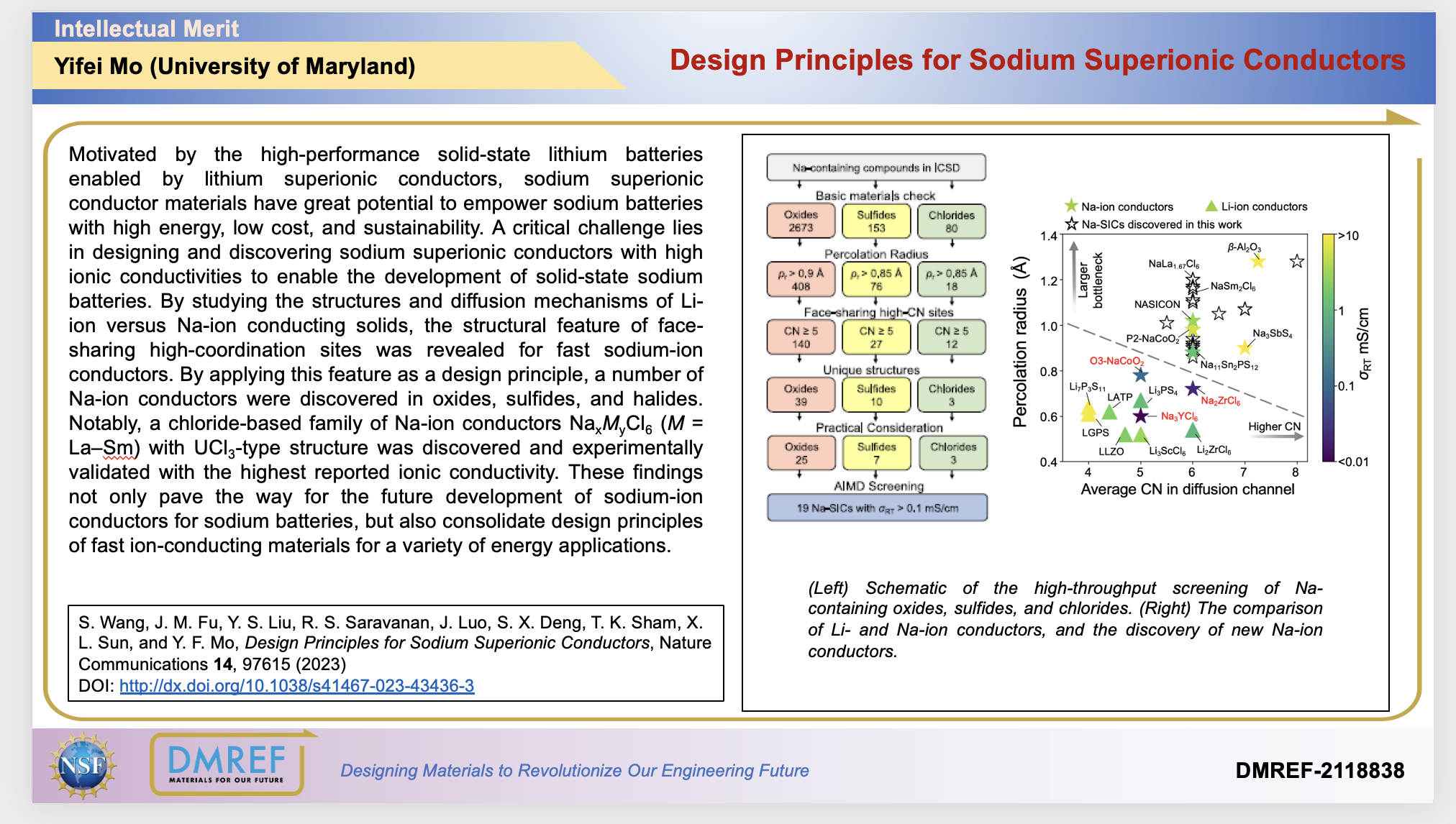
Motivated by the high-performance solid-state lithium batteries enabled by lithium superionic conductors, sodium superionic conductor materials have great potential to empower sodium batteries with high energy, low cost, and sustainability. A critical challenge lies in designing and discovering sodium superionic conductors with high ionic conductivities to enable the development of solid-state sodium batteries. By studying the structures and diffusion mechanisms of Li-ion versus Na-ion conducting solids, the structural feature of face-sharing high-coordination sites was revealed for fast sodium-ion conductors. By applying this feature as a design principle, a number of Na-ion conductors were discovered in oxides, sulfides, and halides. Notably, a chloride-based family of Na-ion conductors NaxMyCl6 (M = La–Sm) with UCl3-type structure was discovered and experimentally validated with the highest reported ionic conductivity. These findings not only pave the way for the future development of sodium-ion conductors for sodium batteries, but also consolidate design principles of fast ion-conducting materials for a variety of energy applications.