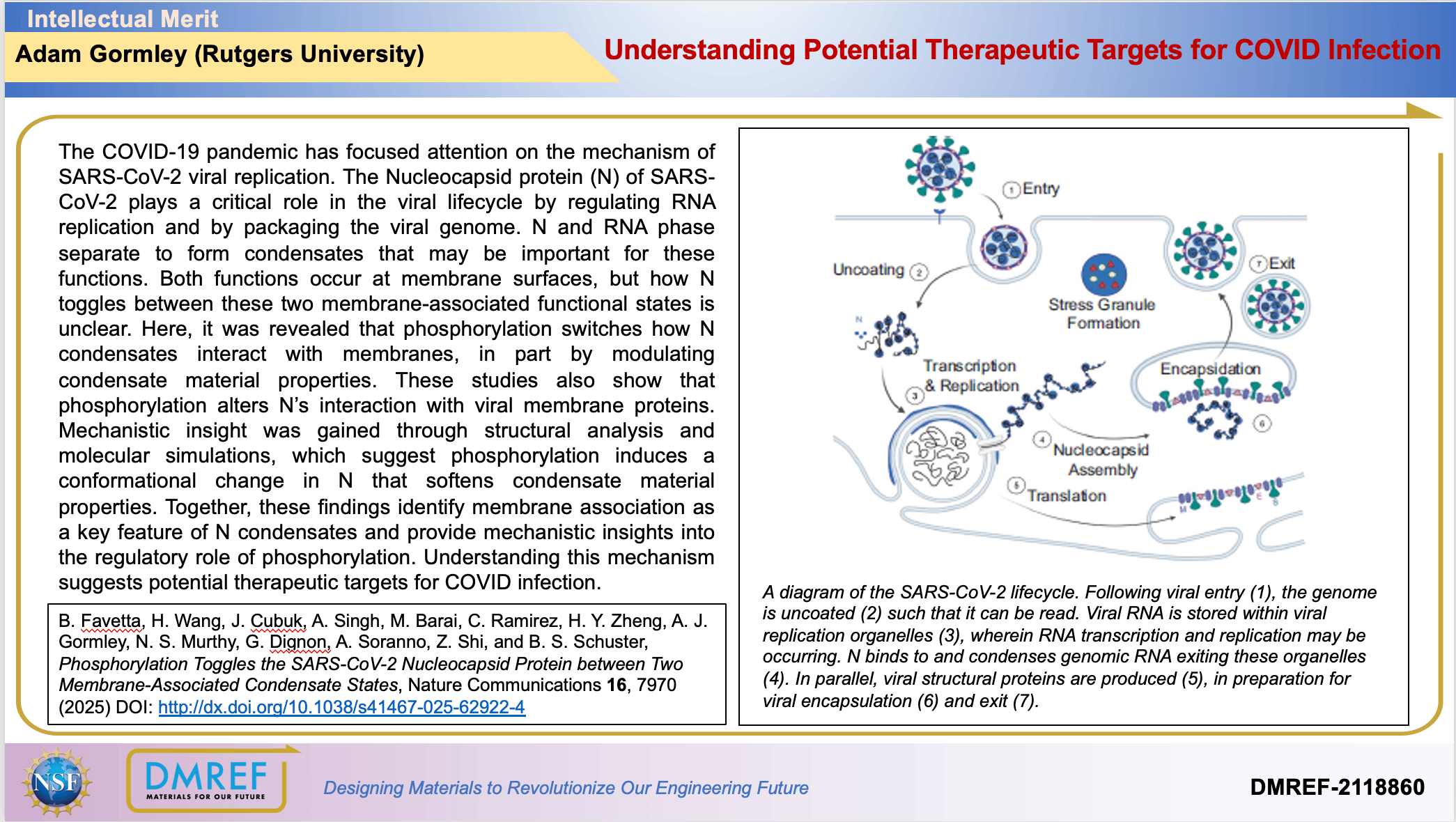
Understanding Potential Therapeutic Targets for COVID Infection
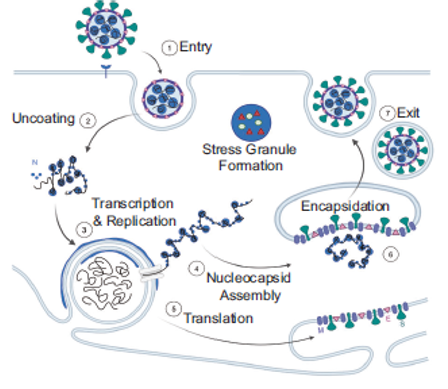
The COVID-19 pandemic has focused attention on the mechanism of SARS-CoV-2 viral replication. The Nucleocapsid protein (N) of SARS-CoV-2 plays a critical role in the viral lifecycle by regulating RNA replication and by packaging the viral genome. N and RNA phase separate to form condensates that may be important for these functions. Both functions occur at membrane surfaces, but how N toggles between these two membrane-associated functional states is unclear. Here, it was revealed that phosphorylation switches how N condensates interact with membranes, in part by modulating condensate material properties. These studies also show that phosphorylation alters N’s interaction with viral membrane proteins. Mechanistic insight was gained through structural analysis and molecular simulations, which suggest phosphorylation induces a conformational change in N that softens condensate material properties. Together, these findings identify membrane association as a key feature of N condensates and provide mechanistic insights into the regulatory role of phosphorylation. Understanding this mechanism suggests potential therapeutic targets for COVID infection.