Crystal Polymorphism and Insecticidal Activity

The role of polymorphism in the action of pesticides and insecticides has only recently become evident. An inverse correlation between lethality of contact insecticides and thermodynamic stability of crystal polymorph has been found in several contact insecticides. The use of a more lethal polymorph of a contact insecticide can overcome resistant organisms. Greater efficiency requires the application of less active ingredient reducing the environmental impact.
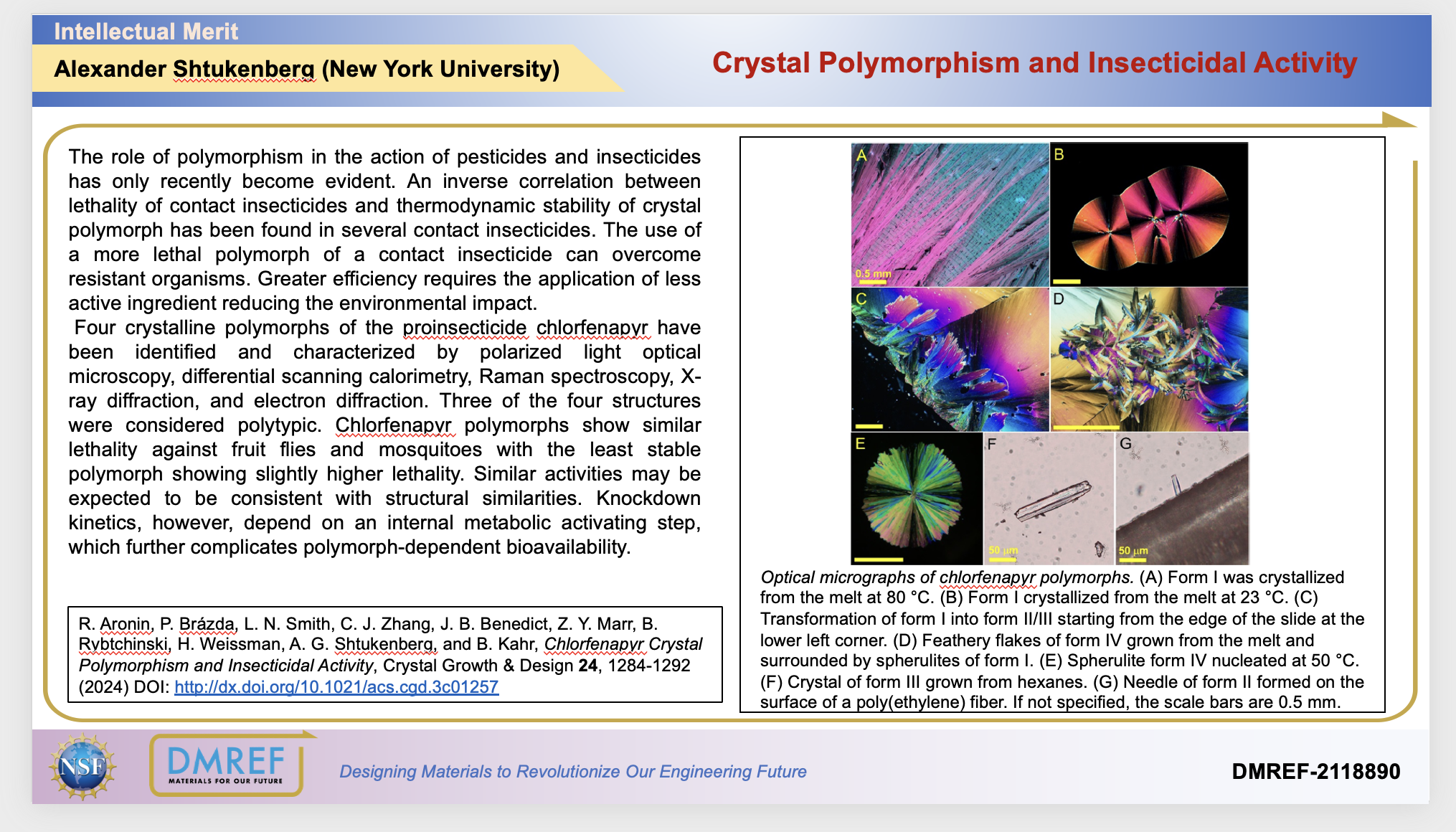
Four crystalline polymorphs of the proinsecticide chlorfenapyr have been identified and characterized by polarized light optical microscopy, differential scanning calorimetry, Raman spectroscopy, X-ray diffraction, and electron diffraction. Three of the four structures were considered polytypic. Chlorfenapyr polymorphs show similar lethality against fruit flies and mosquitoes with the least stable polymorph showing slightly higher lethality. Similar activities may be expected to be consistent with structural similarities. Knockdown kinetics, however, depend on an internal metabolic activating step, which further complicates polymorph-dependent bioavailability.