First High-temperature Superconducting Diode Made from Thin Cuprate Crystals
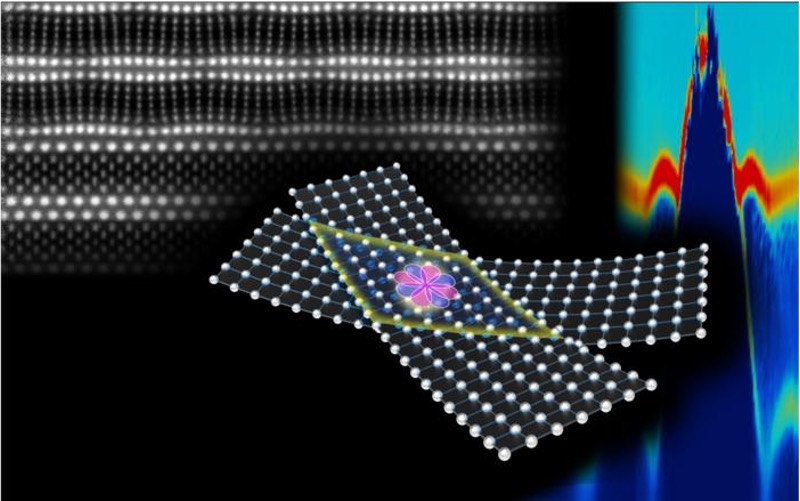
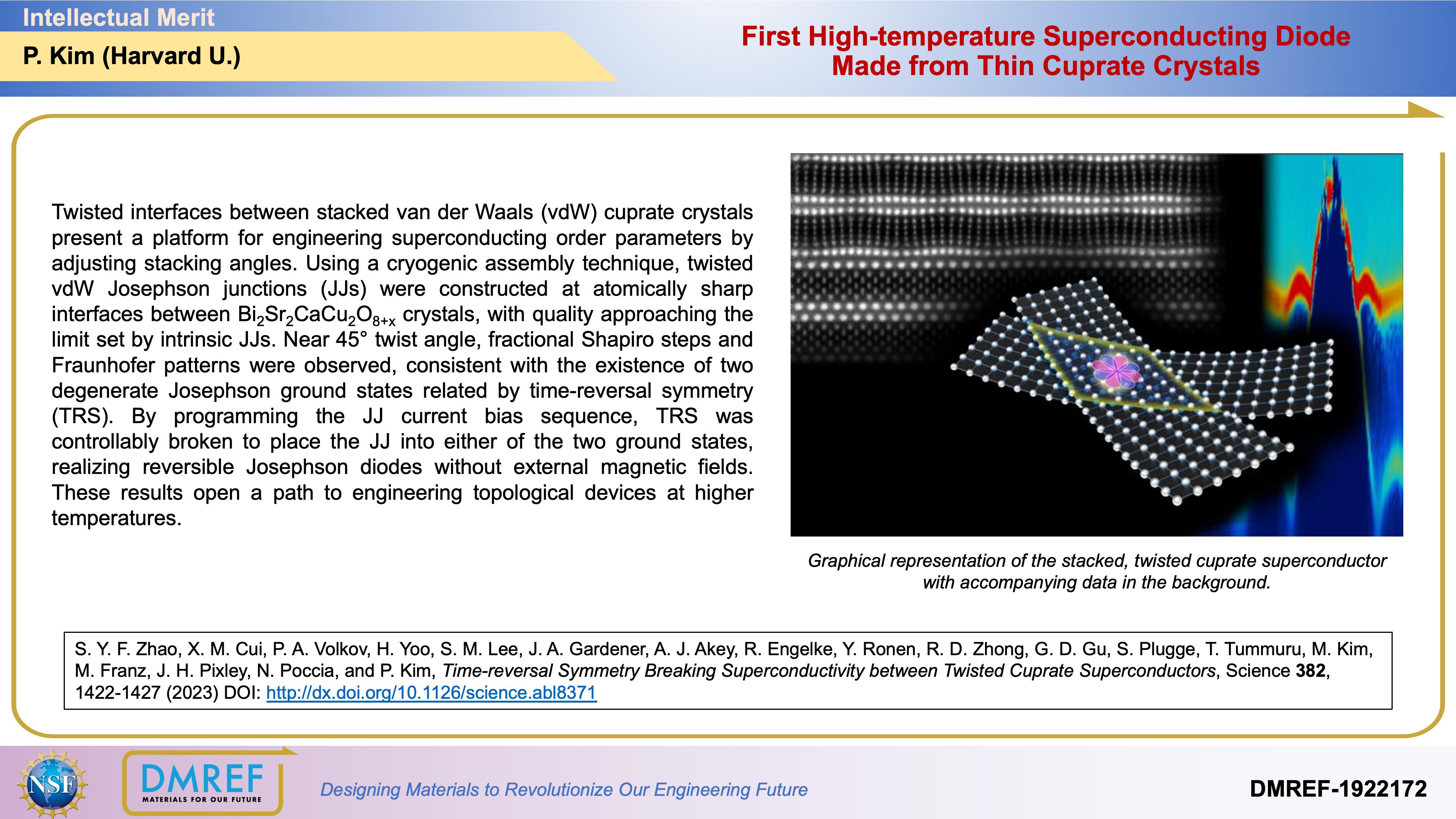
Twisted interfaces between stacked van der Waals (vdW) cuprate crystals present a platform for engineering superconducting order parameters by adjusting stacking angles. Using a cryogenic assembly technique, twisted vdW Josephson junctions (JJs) were constructed at atomically sharp interfaces between Bi2Sr2CaCu2O8+x crystals, with quality approaching the limit set by intrinsic JJs.
Near 45° twist angle, fractional Shapiro steps and Fraunhofer patterns were observed, consistent with the existence of two degenerate Josephson ground states related by time-reversal symmetry (TRS). By programming the JJ current bias sequence, TRS was controllably broken to place the JJ into either of the two ground states, realizing reversible Josephson diodes without external magnetic fields. These results open a path to engineering topological devices at higher temperatures.