Chemically-Responsive Liquid Crystals
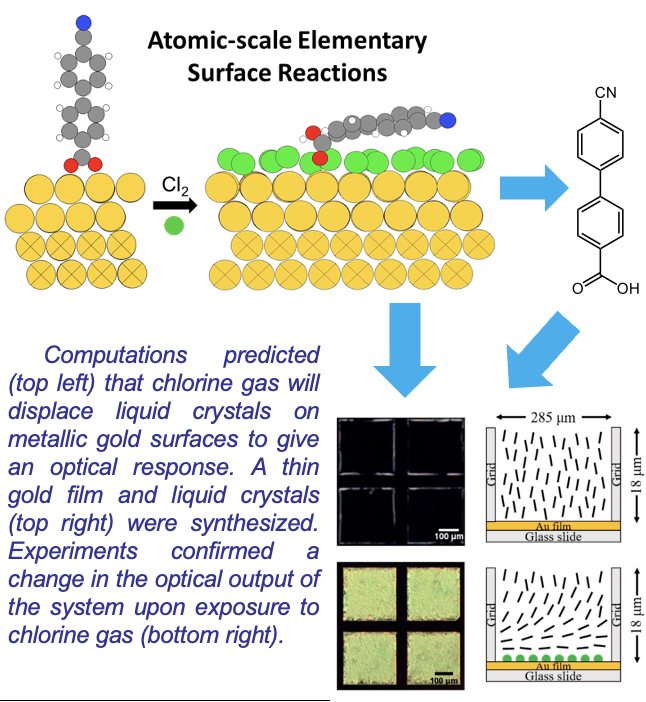
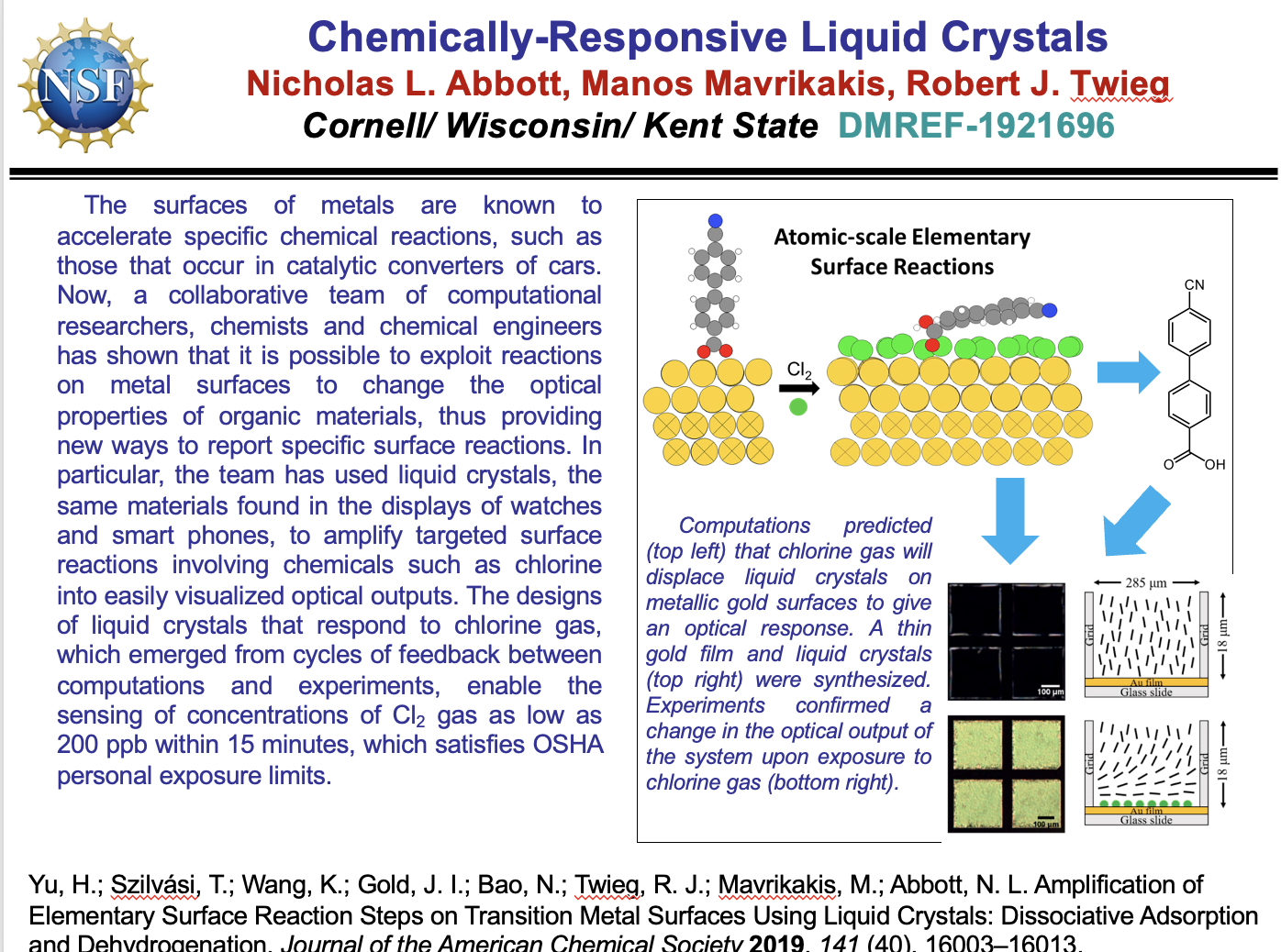
The surfaces of metals are known to accelerate specific chemical reactions, such as those that occur in catalytic converters of cars. Now, a collaborative team of computational researchers, chemists and chemical engineers has shown that it is possible to exploit reactions on metal surfaces to change the optical properties of organic materials, thus providing new ways to report specific surface reactions. In particular, the team has used liquid crystals, the same materials found in the displays of watches and smart phones, to amplify targeted surface reactions involving chemicals such as chlorine into easily visualized optical outputs. The designs of liquid crystals that respond to chlorine gas, which emerged from cycles of feedback between computations and experiments, enable the sensing of concentrations of Cl2 gas as low as 200 ppb within 15 minutes, which satisfies OSHA personal exposure limits.